



By Pauline Daniels, RCC Art Instructor
“I am enough of the artist to draw freely upon my imagination. Imagination is more important than knowledge. Knowledge is limited. Imagination encircles the world.”
– Albert Einstein
 Did you know that when we are born, the most vital cognitive function we have is our imagination? We don’t have memories. Our senses are engaged, but we have no cognitive understanding of how they work or what they represent. We are a bundle of nerves, senses and responses seeking understanding and order.
It is our imagination that ignites the creation of memory and identity. We imagine what grasping our toes and putting them in our mouths will taste and feel like. We repeat the action until we have created the memory of that impulse, action and response. We mimic the sounds and facial expressions we encounter around us, not understanding what we are doing or what it all means. But somehow, using our imagination allows us to match what we experience to a meaning. That’s why we all end up acquiring those family traits that cannot be denied.
We are imaginers, mimics and creators from our first breath. Exploring. Practicing. Playing. Creating. And research has shown that in the later stages of life, when our cognitive functions decline, even in the latest stages of dementia, the imagination is intact. We leave this life as we begin, connecting to our world through our imaginations.
What happens to our imagination as we grow older? Many adults say they rarely use it and don’t think of themselves as creative. Ask a room of 4- or 5-year-olds who is creative or an artist, and nearly every hand goes up. Ask the same question a few years later, and many of those hands stay down.
By age 9 or 10, children still use their imaginations, but creativity often becomes tied to what they make and how that work is judged. That shift continues into adulthood. We still imagine, but often to solve problems, weigh possibilities and answer “what if?” Imagination becomes a tool.
Recent research from the University of Kent and the National Institutes of Health suggests that adults retain a strong capacity for imagination, even if they use and express it differently than children do. In fact, a life of acquired knowledge enhances our ability as adults to process and think creatively. So why isn’t every adult a visual artist? A poet? A musician? A dancer or actor? If not, why not?
The answer has nothing to do with talent. Talent is the product of a vivid, nurtured and free imagination, allowed to practice and explore until it reaches an authentic ending. We are all talented in some way if we apply our imaginations to the pursuit of an authentic ending or the presentation of a work that is authentic.
Because of the pursuit of knowledge, adults bring judgment to artistic creation as right or wrong, good or bad, and the expectation that whatever is created needs to land in the “right” and “good” sides of the chart. That is simply not the purpose of creative expression. Adults want to know how to reach the result before they begin. But that’s not how the process works.
The truth is every creation starts at the beginning: a blank page, a blank canvas, fingers resting on the piano keys or guitar strings. Even the most seasoned artist doesn’t know how the piece will end. Every artist is a beginner every time they begin. The seasoned artist has simply practiced more. The beginning becomes easier with practice, but the product is always a mystery.
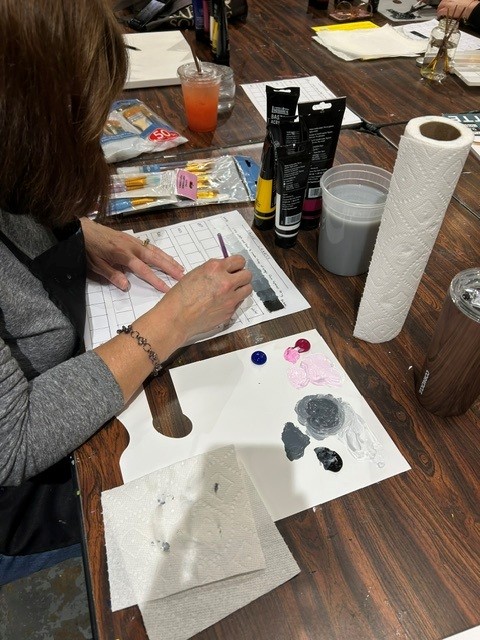
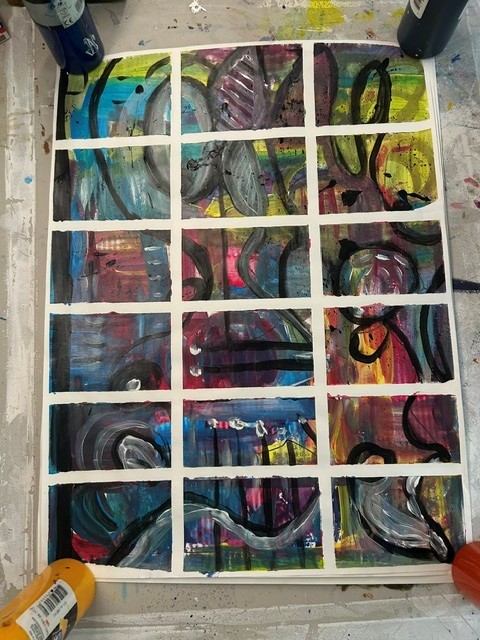
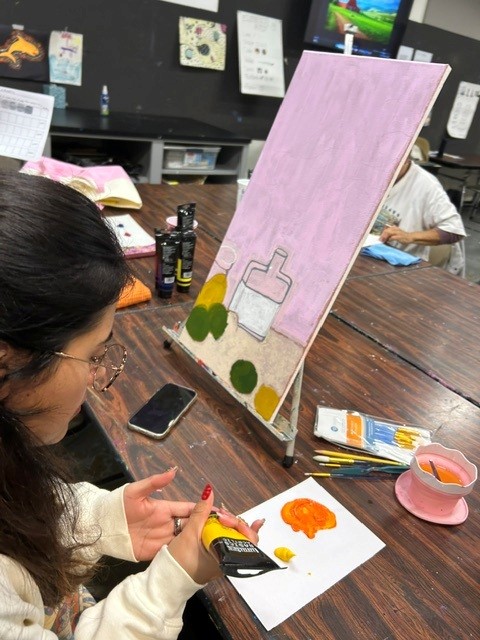
RCC’s weekend art workshops offer space to ignite your imagination. Explore. Experiment. Create. Discover the elements of art, try different materials and see where your imagination takes you. No experience needed. All materials are provided.
Begin at the beginning. Imagine.
Find an RCC Visual Arts Workshop.